What does an event production company actually do?
Updated: 2 days ago
There's more to event production than meets the eye.
Planning an event involves more than finding a venue and deciding what it should look like. Behind every successful conference, exhibition, festival or live event is a team making sure the technical side works as it should.
An event production company provides the equipment, technical expertise and experienced crew needed to deliver that side of an event. From staging and lighting to sound, LED screens and video, the job is to take the requirements of an event and make them work in practice and fit the vision of the agency or designer.

At mrl productions, we work with event agencies, organisers and businesses to provide the technical production that brings events to life. Whether we're supporting an agency's creative concept or working directly with an event organiser, our role is to make sure the technical details are properly planned, installed and operated.
So what does an event production company actually do?
1. Technical planning and production
To discover what event production companies actually do you have to go way back before the doors open at the show.
One of the key parts of our role is the pre-show planning. Before equipment arrives on site, the technical requirements need to be worked out. This means understanding the event brief, the venue, the proposed layout and what needs to happen during the event. Our team uses its technical knowledge and experience to establish what equipment is required, how it will work together and what needs to be considered before the build begins.
So what does an event production company actually do? Depending on the event, this could include working out staging requirements, planning equipment positions, assessing power needs, considering rigging options and making sure the proposed setup is practical for the venue. Our team will spend a lot of time preparing technical drawings that layout every single detail down to the last nut and bolt to make sure that everything works as it should.
Getting these details right early helps avoid problems later and gives everyone involved a clearer picture of what's needed to deliver the event. It also means we have all of the groundwork laid down before we leave for the venue.
2. Lighting, sound and AV design
Our work includes planning every detail of the lighting design, sound systems, audiovisual equipment, LED walls and video down to the last detail. We use lighting in a myriad of ways. Whether its illuminating a conference stage, highlighting an exhibition stand, creating the atmosphere at an awards dinner or supporting a live performance with a full light show, each part has to be designed to fit the scheme. Sound is treated with the same attention to detail. so it provides clear speech and/or music throughout the whole audience area.
When we worked on the Accenture stand with creative agency Enigma, the brief was to design something ambitious enough to command attention on a packed show floor, while keeping it flexible enough to evolve throughout the day.
Dynamic lighting with multiple programmed states changed seamlessly as the day progressed. We designed different looks for different moments - each one complementing what Accenture was doing on the stand. We also flew large LED ceiling panels that gave the entire space a sense of scale. In 2024, we evolved the design further, swapping the LED panels for bespoke light boxes that were even more striking.
Whatever is required, we'll work with your agency, event organisers and venue to develop the technical solutions that support your plans. It's all about drawing on our experience to advise on what's possible, what's practical and what will work best in the space. In short, it's a collaborative process that draws upon skills and knowledge from across the board.
3. Supplying the right equipment
No two events are the same and technical requirements can vary considerably depending on its size, format and location.
For example, a conference might need staging, microphones, presentation screens and sound reinforcement. An exhibition might require specialist lighting, LED displays, rigging and power distribution. A festival may need stage structures, lighting rigs, sound systems and the equipment required to support live performances.
We supply the production equipment needed for all these different environments, drawing on our vast range of equipment and experience to put together a solution suited to the job. If we don't have something, we will either buy it in or hire it ourselves for the job. At the end of the day, it's about making the project work!
4. Working alongside event agencies and organisers
Many events involve a creative or event agency responsible for the overall concept, design and client relationship. The technical production needs to work alongside that vision, turning creative ideas into something that can be delivered safely and effectively.
We regularly work as part of a wider project team, supporting agencies with the technical knowledge, equipment and crew required to deliver their plans. The events industry is one of those spaces where many people have known, and worked with each other for many years and those relationships are key to making jobs go smoothly.
Depending on what is needed, we could be advising on the practicalities of a proposed design, developing a lighting solution, specifying AV equipment, planning rigging requirements or working with other suppliers to make sure the different technical elements fit together. If something isn't going to work, we will have discussions with the rest of the team and find a solution. It's all about teamwork and collaboration to ensure the best results are produced at the event.
5. Installation, rigging and technical crew
Once the plans and designs are finalised, the equipment needs to be delivered, installed and prepared for the event.
The first part of this process is the delivery and logisitics of getting everything where it needs to be on time without delay. If we're taking equipment across to Europe, this poses separate challenges and is where our back office team comes into play. They will arrange flights and accommodation for the team, arrange local crew (if needed), prepare truck loading plans and arrange the customs paperwork and Carnets. They will also book the trucks in for unloading and de-rig as required with the venue and arrange any specialist equipment that might be needed.
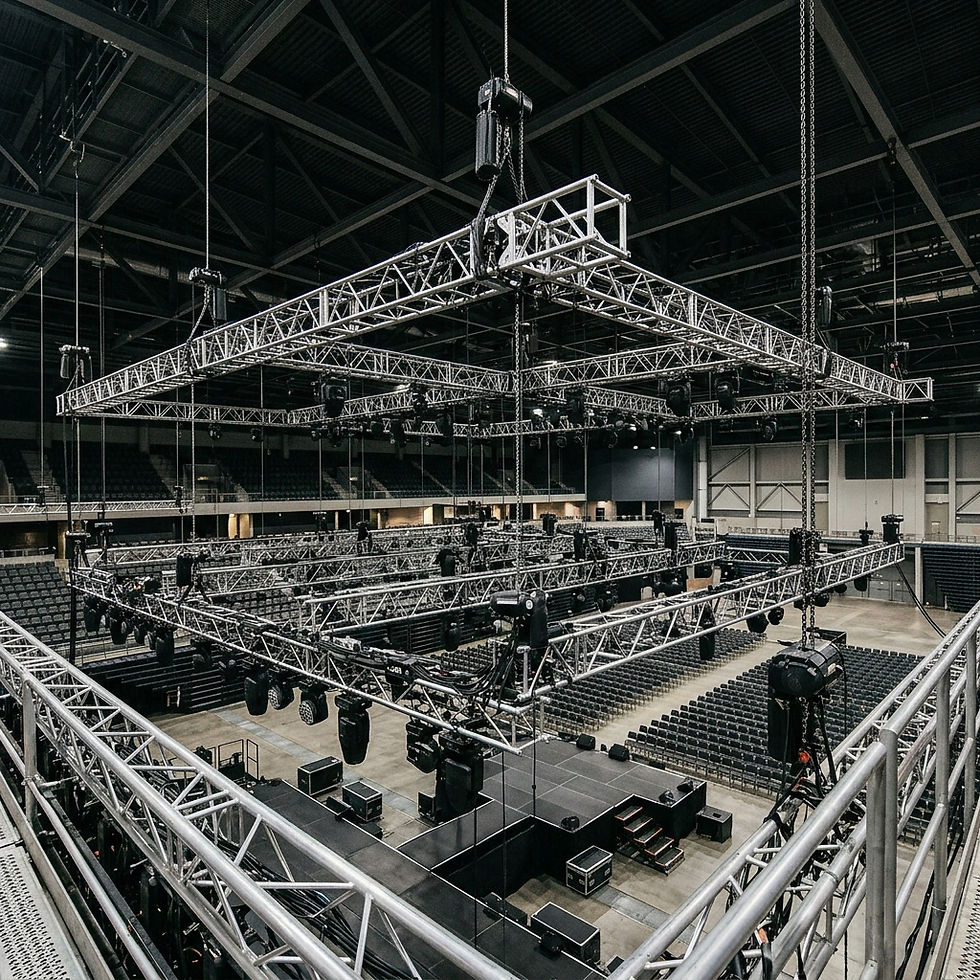
Once at the venue, the crew unloads the equipment and starts working with the army of other contractors on site to start building the event. This includes building truss, flying rigging, building staging, installing the lighting and sound systems and setting up LED screens and AV equipment.
Everything needs to be installed in the right place, connected correctly, tested and coordinated with the other elements of the production. This is where the early planning, design and drawings are invaluable. Good communication and careful coordination help keep the build moving and ensure the technical setup is ready when it's needed.
6. Testing and live event operation
Having the equipment installed is only part of the job. Before an event opens, everything needs to be checked and prepared for use.
Depending on the production, this can include testing microphones and sound systems, checking lighting, configuring screens and video playback, and making sure the various elements work together as intended.
Our support doesn't end when the doors open either. During the event, our technical crew operate the equipment and manage the production requirements, from running lighting cues and presentation playback to monitoring sound and video. We're also on hand in case any unforeseen issues pop up that need sorting.
Whether it's a conference with a tightly timed speaker programme, an awards dinner with multiple presentations or a live event with lighting and sound cues, experienced technical events crew ensure the production runs as planned and respond when adjustments are needed.
7. The final curtain call
Once the event has finished and the delegates or guests have gone home, it's time for the de-rig. It's just as important as the initial build and takes the same level of team work to ensure it's done safely and on time.
Once we're all packed up and ready to go, the team heads back to base, books all the equipment back and starts planning for the next event!
Choosing an event production company
When choosing an event production company, it's worth looking beyond the equipment a supplier can provide.
Technical knowledge, experience, communication and the ability to work effectively with the wider project team are just as important. You need a team that understands your requirements, can advise on the technical details and has the equipment and people to deliver the agreed solution.
Here at mrl productions, we provide event production services for exhibitions, conferences, festivals and live events across the UK and Europe. We work with event agencies, organisers and businesses to supply the staging, sound, lighting, AV, LED screens, rigging, power and technical crew needed to make each production work.
From the initial technical planning through to installation and live operation, we'll help you get it there, build it, rig it and run it.
Planning an event? Get in touch with mrl productions to discuss your technical production requirements.


Comments